Latest

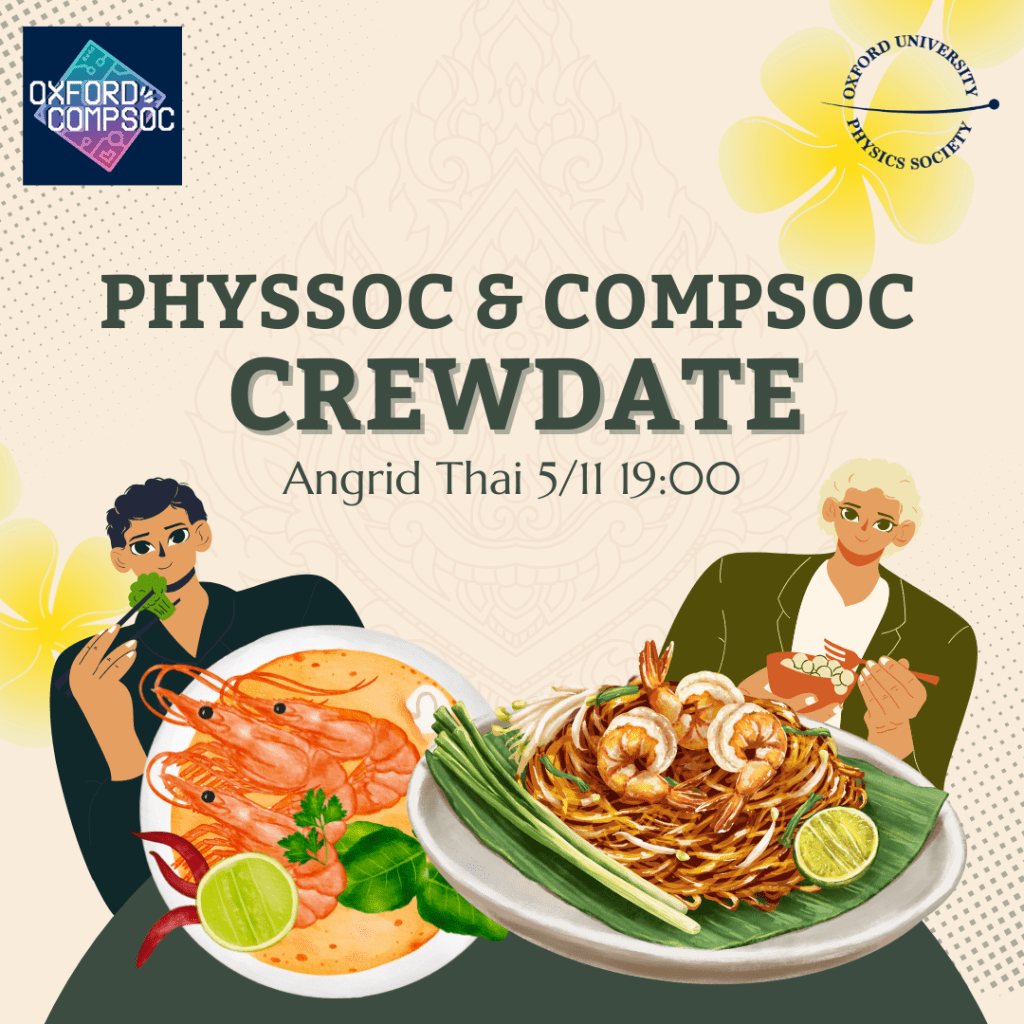
PROF. TIM WOOLINGS: ATMOSPHERIC PHYSICS (JETSTREAM)

Join us tomorrow night (06/11/2024) at the Martin Wood Lecture Theatre at 17:30 for a talk by Prof. Tim Woolings on atmospheric physics.

Tim Woollings is a Professor in Physical Climate Science at AOPP, specializing in large-scale atmospheric dynamics. His research interests focus on the weather and climate of the mid-latitudes, particularly the behavior of jets, storm tracks, and large-scale regimes such as blocking. He investigates the fundamental understanding of these features, their variability, and their responses to factors like anthropogenic climate change. Recently, his work has emphasized the interaction between mid-latitude dynamics and both tropical and polar regions.

He serves as the Oxford Joint Chair of the Met Office Academic Partnership and collaborates closely with the Met Office on pressing weather and climate issues. He encourages anyone with questions about the Oxford-Met Office collaboration to reach out, as he is dedicated to developing new projects and connections.

Much of Woollings’ research centers around mid-latitude jet streams, which are arguably the most significant weather systems on Earth. For those living in the mid-latitudes, the jet stream is likely the most critical factor influencing their weather and climate. To learn more, he invites readers to check out his new book on the jet stream, written for a general audience.
PROF. ANDRE LUKAS: MACHINE LEARNING AND THEORETICAL PHYSICS

Join us tonight (31/10/2024) at the Martin Wood lecture theatre at 17:30 for a talk by Oxford’s very own Prof. Andre Lukas on the use of machine learning for theoretical physics.

Abstract: “Machine learning and related computational methods have become substantially more powerful and are already applied in many areas of science. In the future, they are likely to change scientific research profoundly. In this talk, Prof. Andre Lukas will be discussing two ways in which machine learning can be helpful in physics: solving differential equations and model building. He will attempt to explain the basic ideas behind these applications and present some recent examples, including inflationary model building, finding string models with certain prescribed properties and computing the masses of fermions from string theory.”

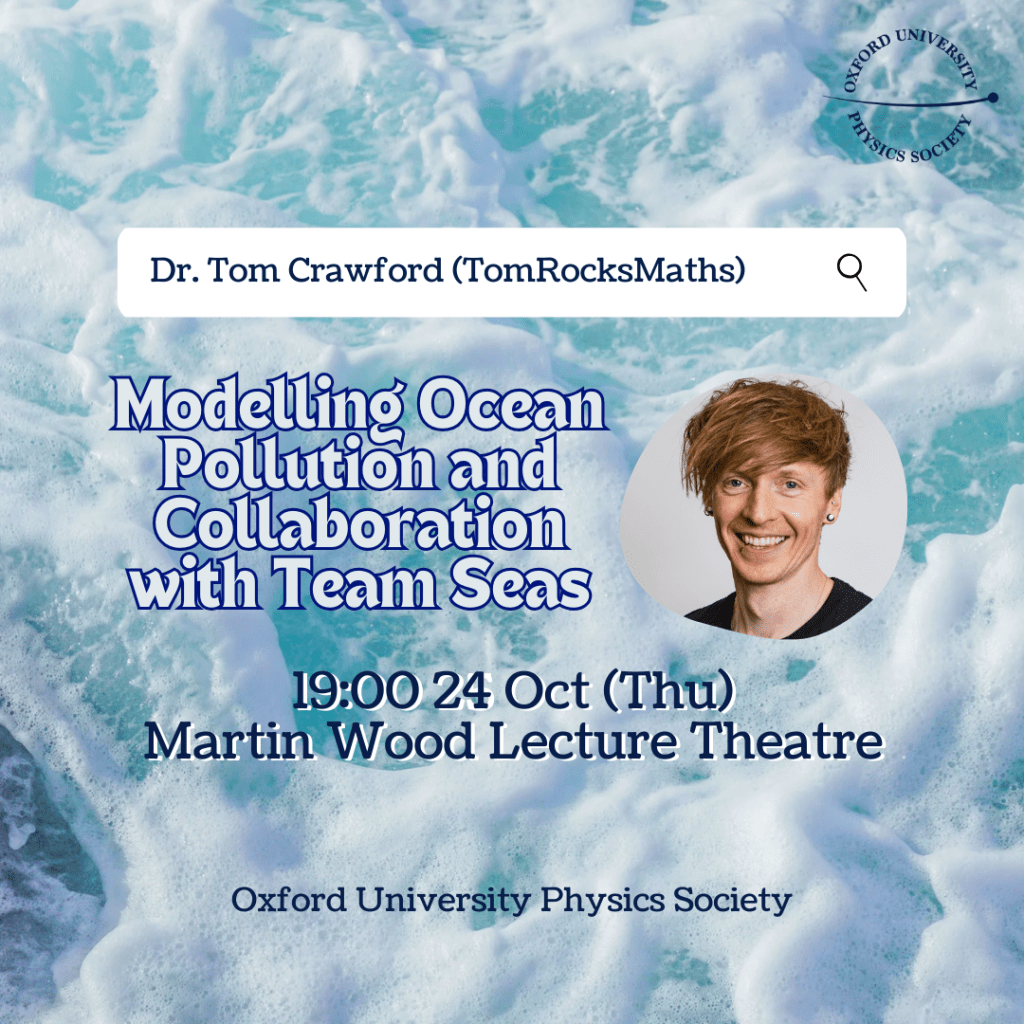
DR. TOM CRAWFORD (TOM ROCKS MATHS): MODELLING OCEAN POLLUTION AND COLLABORATION WITH TEAM SEAS

Tonight (24th October), We host Dr. Tom Crawford (Tom Rocks Maths) at the Martin Wood lecture theatre to give us a talk about modelling oceans and his collaboration with Team Seas.

Using Maths to Clean the Ocean: Where does river water go when it enters the ocean? And what does this have to do with plastic pollution? Dr Tom Crawford explains his PhD thesis in Fluid Dynamics, and shares the story of how he ended up sailing around Antarctica for 6 weeks in the name of maths.

Bio: Dr Tom Crawford teaches Maths at the University of Oxford and the University of Cambridge, as well as running the award-winning ‘Tom Rocks Maths’ outreach programme. With over 25 million views on YouTube, it’s likely you’ve seen him taking a high school maths exam with no preparation, or talking all things fluid dynamics on Numberphile. When not misbehaving with numbers, Tom can usually be found playing football, snowboarding or getting a new maths tattoo (15 and counting…)

*Due to the later start time than usual we will have pizza reception before the talk this week!

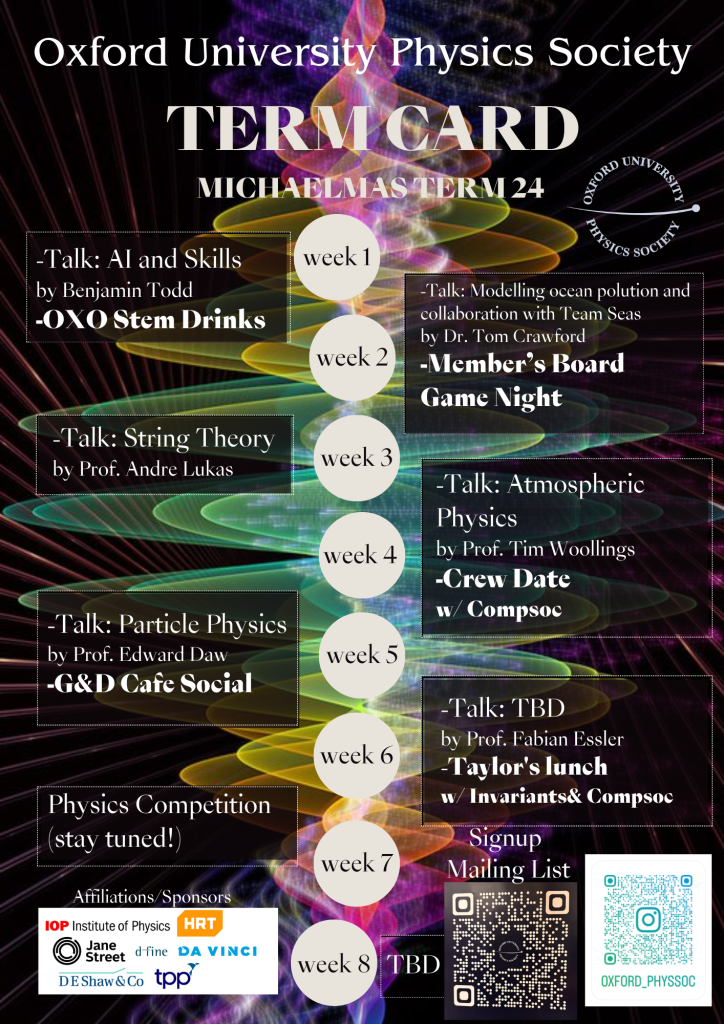
MICHAELMAS 2024 TERM CARD!

Our Michaelmas 2024 term card is out now!

See below for talks from the likes of Tom Crawford (Tom Rocks maths), Benjamin Todd (80,000 hours), and more as well as a whole host of social and other events!

All talks are Thursday’s at 17:30 (Unless we say otherwise)

BENJAMIN TODD: AI AND SKILLS

This Thursday (17th October) at 17:300, we host Benjamin Todd from 80,000 hours at the Martin Wood lecture theatre to give a talk on AI and Skills.

About Benjamin Todd: He has a 1st from Oxford in a Masters of Physics and Philosophy, and has published in climate physics. He founded 80,000 hours, a non-profit that provides free research and support to help people find careers that effectively tackle the world’s most pressing problems. Today he writes about life during transformative AI.

We look forward to seeing you in our first academic event in this term!

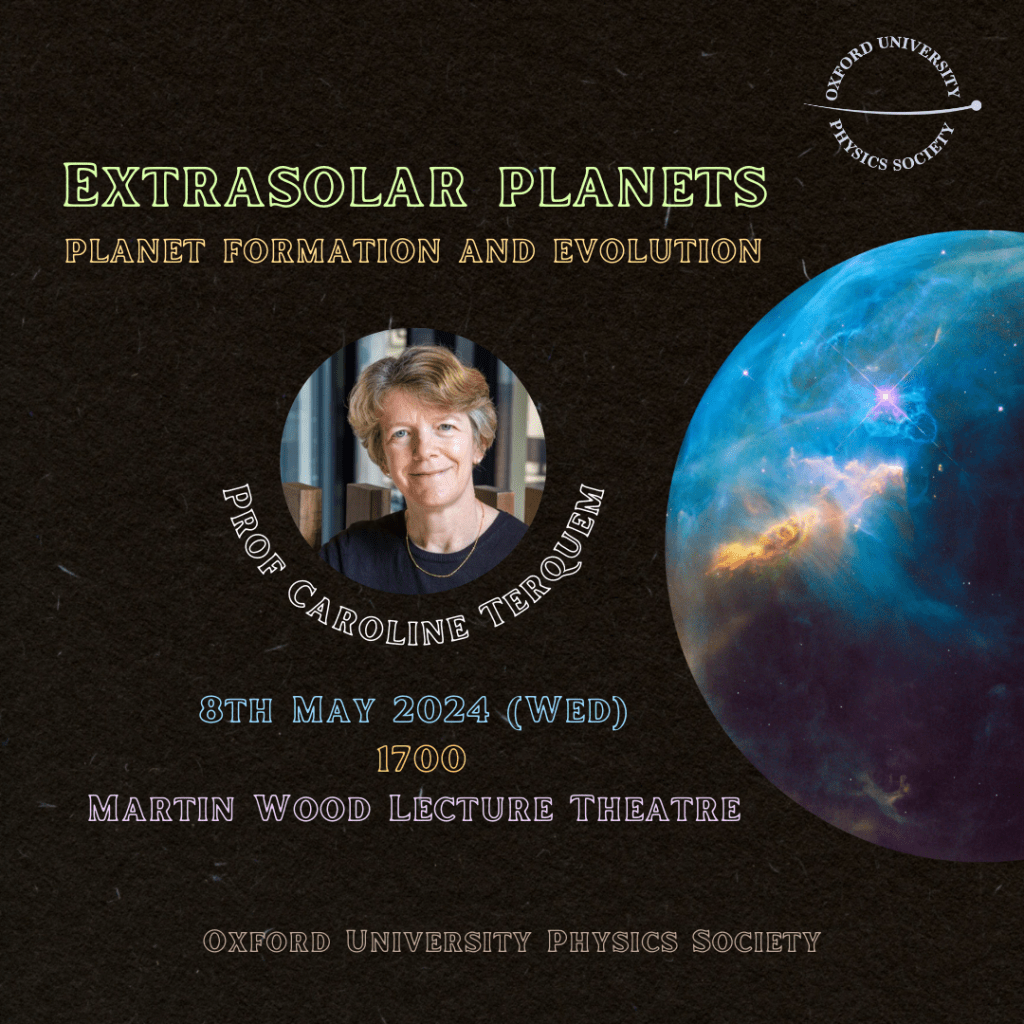
PROF. CAROLINE TERQUEM: EXTRASOLAR PLANETS – PLANET FORMATION AND EVOLUTION

This Wednesday (8th May) we host Prof. Caroline Terquem at the Martin Wood Lecture Theatre to give us a talk about extrasolar planets.

The first planet in orbit around a star simiIar to the Sun was discovered in 1995. Since then, more than 5000 extrasolar planets have been detected. Most of them have characteristics very different from the planets in our own solar system. I will give an overview of these extrasolar planets and describe planet formation and evolution, with a particular focus on migration and multi-planet systems.